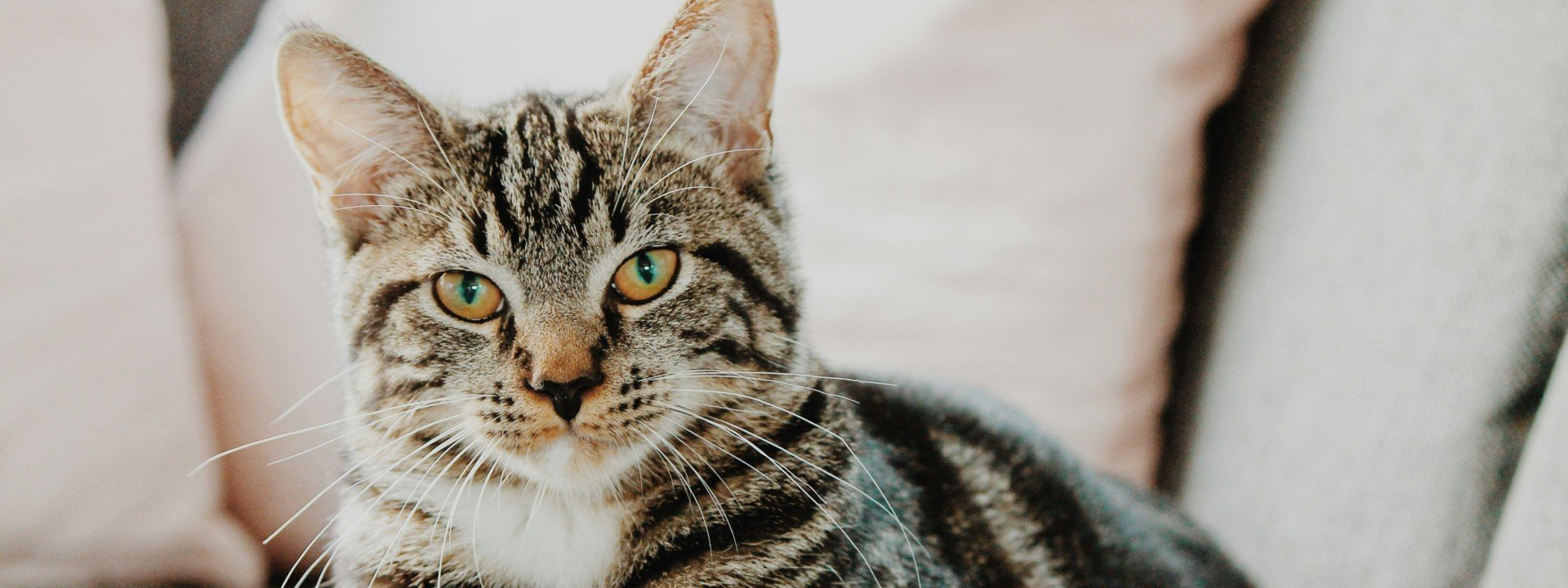
Are you a cat person or a dog person? A cat person prefers (likes more) cats and a dog person likes dogs more. I am a cat person. I grew up with cats (had cats when I was a child), and now I have two cats of my own. I use a lot of cat vocabulary in English in my life!
If you’re also a cat person, here’s some cat vocabulary that you can use! Even if you like dogs better (more) you can still improve your English with these words.
Scratching post
Cats have claws that they like to keep sharp. They use their claws when they hunt, or scratch your favorite couch! They also scratch things to relieve (get rid of) stress – kind of like humans using a stress ball. If you have a cat, it’s important to have a scratching post.
A scratching post is a tower wrapped (covered) in rope or carpet that cats can scratch on. They can also be made of cardboard. I have a scratching post that looks like a tree. My cats love to scratch on it and then nap in the leaves. And it keeps them from destroying (to ruin) my couch!
For example:
- I have to get new scratching posts for my cats. The cardboard is ruined and it’s getting all over my house.
- When I can’t find my cat, I look first on the scratching post. She loves hanging out there.
To purr
One of my favorite sounds is a cat purring. It sounds like they have a little motor in them. A cat purrs when it is happy and relaxed. It’s a sign that they like you and are comfortable (happy, feel secure). My cat is purring on my lap as I write this!
For example:
- Sandra’s cat purrs very loudly all the time. He must be very happy in his home!
- Alex’s cat likes to sit on his lap and purr. He’s a very cuddly (be physically close and loving) cat.
To pet
This might be the most important cat vocabulary in this list. Petting a cat is such a wonderful thing. Petting is when you touch an animal’s fur. You move your hand from the head, down the body.
My cats love to be pet. But not all cats do! Just like people, they’re very individual (unique, have different tastes). Some like to be touched, and some don’t. It all depends on the cat.
For example:
- When you come over, please don’t pet my cat. He doesn’t like to be touched by strangers (people he doesn’t know).
- His cat loves to be pet. She just sits on his lap all the time, hoping he’ll pet her.
Litter box
Another important piece of cat vocabulary is the litter box. The litter box is where cats go to the bathroom. A litter box has cat litter (little pieces of clay, plastic, or wood) inside. The cat will use the litter box, and then scratch the cat litter. They cover their poop and pee so that other animals can’t find them. Just like you like to have a clean bathroom, it’s important to keep a litter box clean!
For example:
- I’m doing a deep clean of my apartment this weekend. I’ll clean the litter boxes, too. Then everyone will have a clean house!
- Can you put some fresh litter in the litter box, please? It’s getting a little smelly.
Do you have cats? Do you use any of this cat vocabulary? Share with us in the comments below!
Did you like this blog? Share it with others! Let us know what YOU think!
Check out these other popular blogs: Filler Words in English, Vocabulary for Sleeping, Suffixes -er and -ee, or these Conversation Topics to Avoid in English!
 Erin Duffin lives in Hamburg, is an English teacher, blogger, yoga instructor, and is a huge cat person. She loves spending rainy days on the couch with her two cats, Hecate and Bastet.
Looking for more phrases, ways to use English every day, or get the conversation started? Sign up for our newsletter or check out the website!